
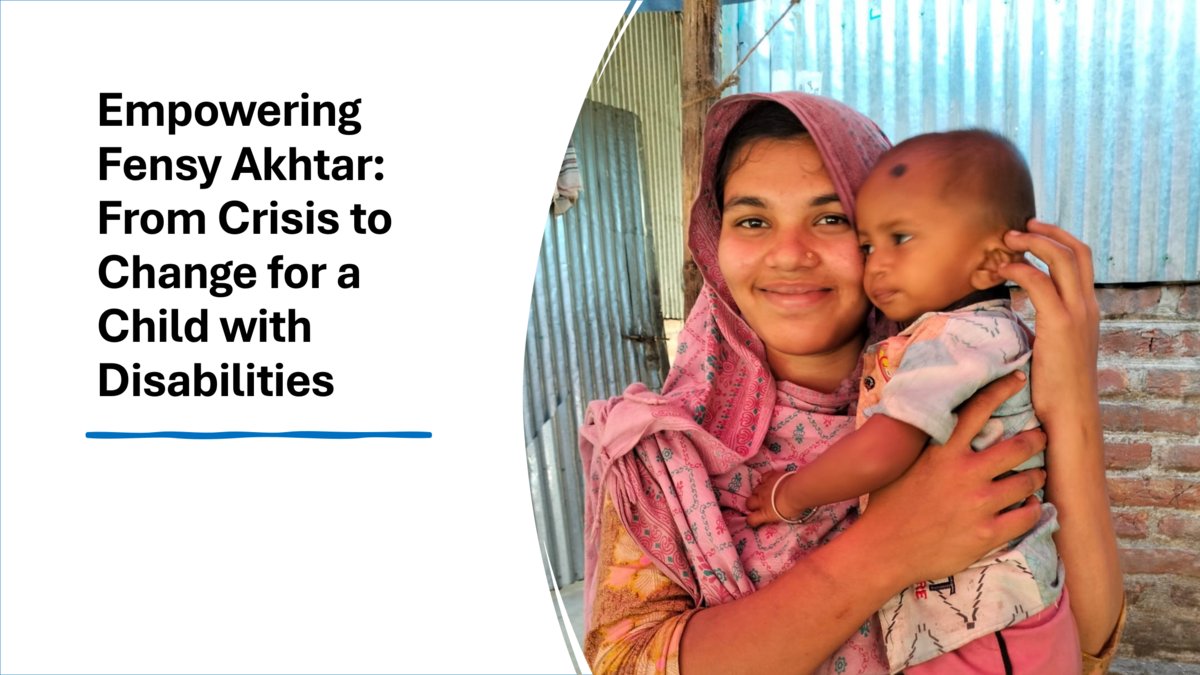
Breaking the Silence Around Disability and Malnutrition
In many rural communities of Bangladesh, illness and disability are often accepted as fate. When a child is born with a cleft lip, the condition is whispered about, sometimes hidden, and rarely understood as something treatable. If the child is smaller than others, struggles to breastfeed, or falls sick frequently, it is often dismissed as "natural weakness" rather than a warning sign especially when families are already struggling to meet daily needs. When health, nutrition, and hygiene are often treated as separate concerns, for a child with a disability the care becomes not just difficult, but overwhelming.
The Healthy Village Urban (HVU) programme works to change exactly that reality. By combining water, sanitation, hygiene, nutrition, and maternal-child health services, the programme supports communities to understand that a child's growth is shaped not by luck, but by environment, knowledge, and care.
But for Fensy Akhtar- a beneficiary of Healthy Village in Urban programme, realized this understanding only after fear nearly took away her son.
Fensy Akhtar is only twenty years old. With an education up to grade eight, she lives in Sardertari village with her six-member family. Her son, Rajin Babu, was born with a cleft lip. To Fensy, he simply looked smaller than other children.
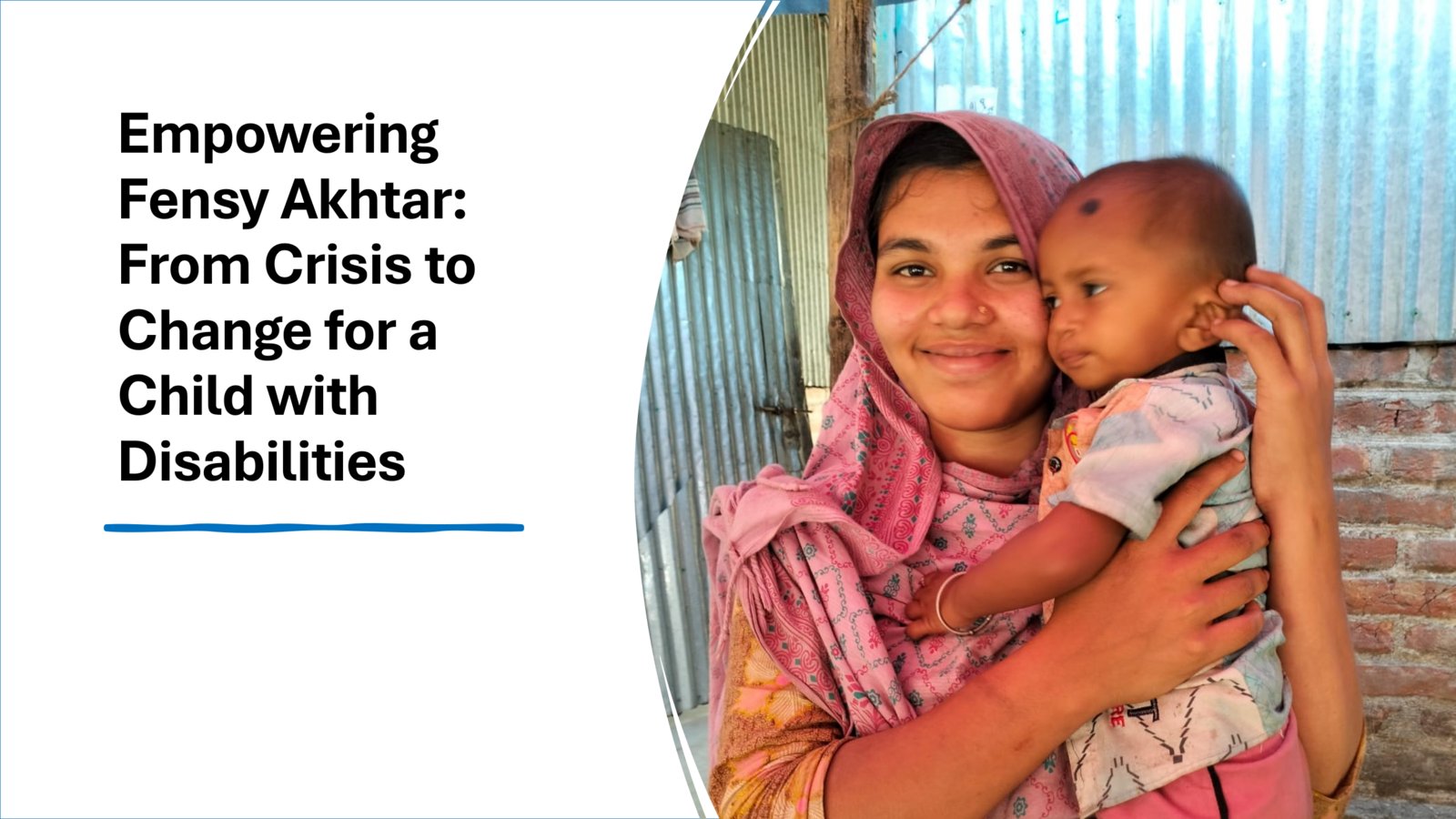
"I thought he was just naturally weak," Fensy recalls. "Some babies grow slowly."
At the time, she did not realize he needed urgent medical attention.
Rajin struggled to feed properly. He fell sick often. Diarrhoea and fever became common. By eleven months, he weighed only 5.2 kilograms - severely malnourished (SAM), though the family did not understand the danger.
In the Bangladeshi community, disability carry silent stigma. Families avoid discussion. Unlike others, many of Fensy's family believed treatment is impossible or unaffordable. So, the condition remained untreated. In January 2023, courtyard meetings began in Sardertari under the HVU programme. Alongside the sessions regarding nutrition, sanitation, hygiene and health, sessions on disability screening and care are also discussed, topics rarely discussed openly before.
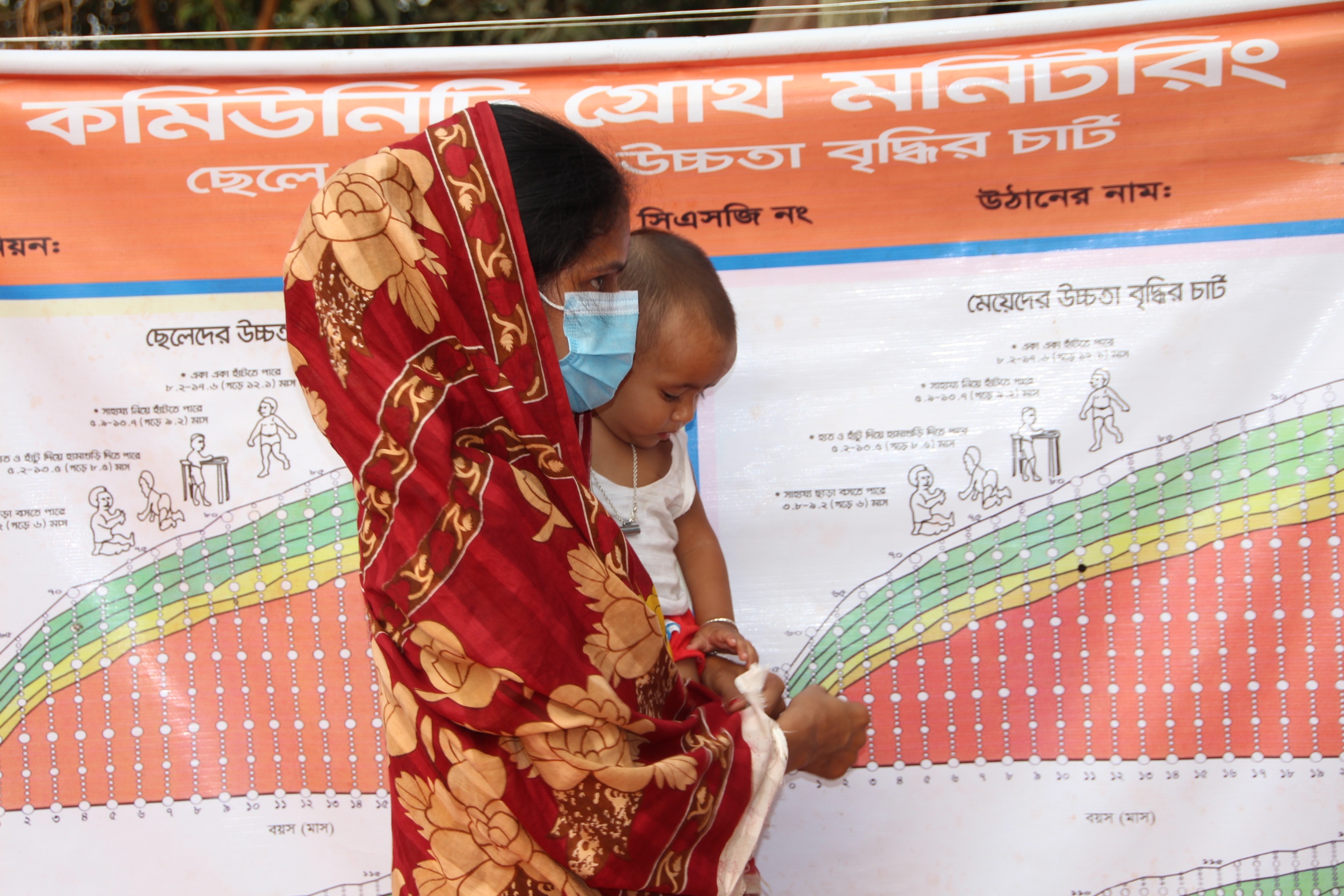
A Community Support Group formed. Courtyard sessions started bringing mothers together. At first, Fensy only listened. Then one day she brought Rajin. During a growth monitoring session, a community health worker measured Rajin babu carefully and his status was alarming. The community health worker explained to Fensy the significant risks of malnutrition and possibility of Rajin's cleft lip could be treated.
The Turning Point
Rajin required surgery. At first the family felt it was beyond their reach. With counselling and referral support from the programme they travelled to Bogura where his surgery was done free of charge. Following the surgery, Rajin received treatment for severe malnutrition at the district hospital.
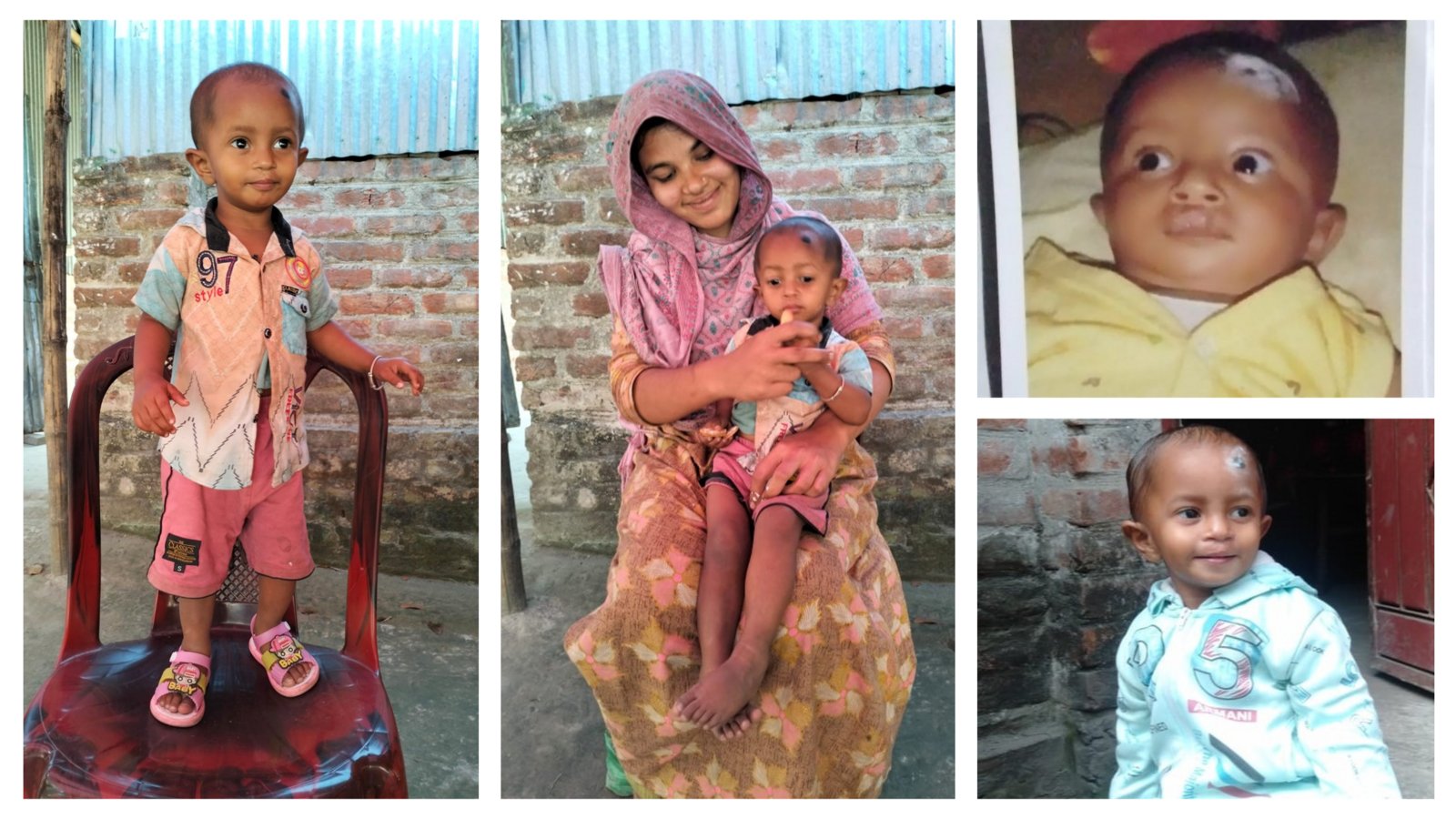
The community health worker began visiting the house. She showed how to wash hands before feeding, how to prepare safe food, how to continue breastfeeding during illness, and why diarrhoea could quickly become life-threatening for malnourished children. She explained oral rehydration and safe water storage. She involved the whole family in the process - not only the mother. Slowly, the household began to change their norms.
Within four months, Rajin gained 2.6 kilograms and continued improving steadily.
But perhaps the greatest transformation was Fensy herself. She now helps facilitate courtyard sessions, encouraging other mothers to monitor growth for their children. The same mother who once believed her child was simply "weak" now explains the warning signs of malnutrition to neighbours.
The Healthy Village approach did not only heal one child. It helped a community learn how to protect its children before illness becomes normal.
Dr. Mithun Gupta
Programme Manager, Max Foundation Bangladesh
Related Stories
Healthy Village: How an Integrated Community Model Is Reducing Child Stunting at Scale
The Healthy Village model, pioneered in Bangladesh, integrates WASH, nutrition, and maternal health into a community-led approach. Stunting fell from 51% to 25% in three years.
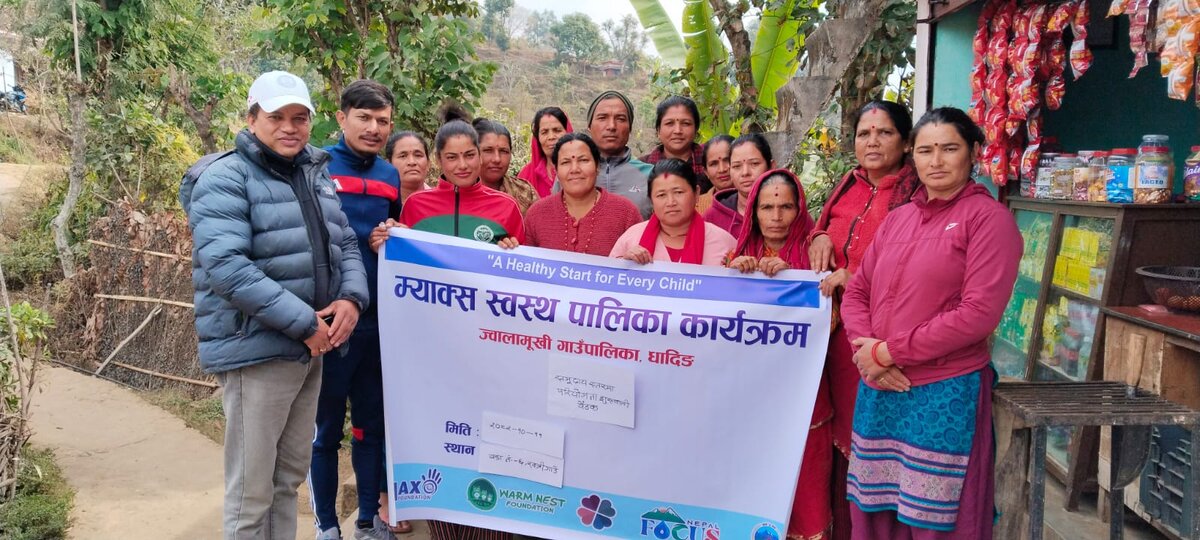
Max Swastha Palika: Advancing a Scalable, Municipality-Led Model to reduce child stunting in Nepal
The Max Swastha Palika programme strengthens municipal systems in Nepal to deliver integrated WASH, nutrition, and health services through community ownership, market-based solutions, and evidence for scale.