
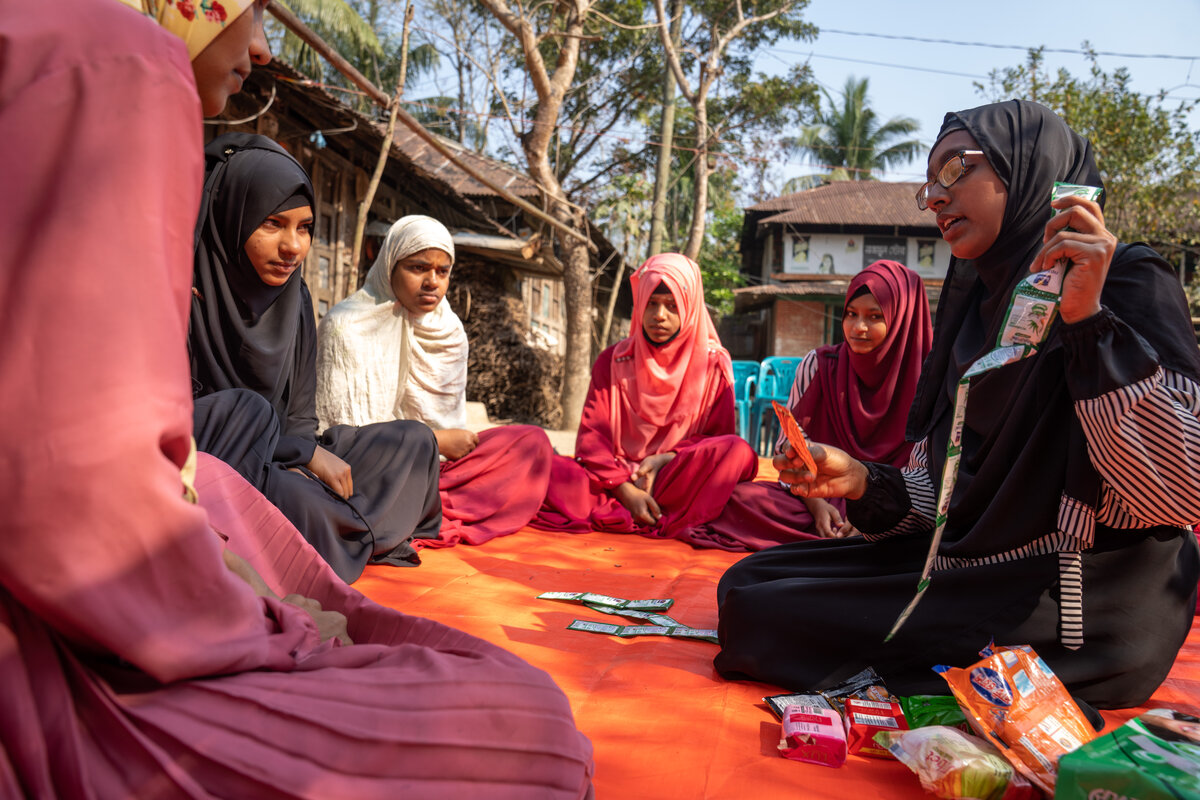
1,122 Entrepreneurs Powering Community Health Across Bangladesh
Sustainable health outcomes require local ecosystems of services and products that persist long after programme funding ends. Max Foundation has catalysed 1,122 entrepreneurs across 4 distinct business models, creating livelihoods while ensuring communities maintain ongoing access to essential health and WASH services.
Four Pathways to Entrepreneurship
Each entrepreneur type addresses a specific gap in the community health and WASH value chain. Together, they form an interconnected network — Health Promotion Agents refer customers to Sanitation Entrepreneurs, Plumbers maintain the infrastructure that Cleaning Entrepreneurs help keep hygienic.
| Entrepreneur Type | Count | Avg. Customers Served | Avg. Turnover |
|---|---|---|---|
| Health Promotion Agents (HPA) | 480 | 306 | €688 |
| Sanitation Entrepreneurs | 395 | 835 | €8,481 |
| Cleaning Entrepreneurs | 227 | 490 | €1,582 |
| Plumbers | 20 | 472 | €3,680 |
| Total | 1,122 | — | — |
Health Promotion Agents: Frontline Health at the Doorstep
Our 480 Health Promotion Agents (HPAs) are the primary point of contact for maternal and child health in their communities. Each HPA serves an average of 306 customers, combining health services with the sale of essential health commodities.
Sanitation Entrepreneurs: Building the Infrastructure
The 395 Sanitation Entrepreneurs serve the highest average customer base — 835 customers — and generate the highest average turnover at €8,481. They manufacture, sell, and install the physical infrastructure that communities need for improved sanitation.
Cleaning Entrepreneurs and Plumbers
Completing the WASH value chain, 227 Cleaning Entrepreneurs ensure continuous access to hygiene supplies (average 490 customers, €1,582 turnover), while 20 trained Plumbers maintain critical water infrastructure (average 472 customers, €3,680 turnover).
Though smaller in number, plumbers play a disproportionately important role — they are the ones who keep piped water grids, latrine systems, and drainage infrastructure functioning. Their higher per-entrepreneur turnover reflects both the technical skill required and the critical nature of their services.
Market Expansion: Entrepreneurs Growing Beyond Their Training
Perhaps the most encouraging indicator of sustainability: A large portion of entrepreneurs have extended their product lines and supply networks beyond their original training scope during the project period.
This market expansion demonstrates genuine business acumen — entrepreneurs identifying adjacent opportunities, building stronger supplier relationships, and responding to customer demand. It signals that these are not aid-dependent activities but genuine market-driven enterprises.
Building Markets, Building Health
These 1,122 entrepreneurs represent more than individual livelihoods. They are the permanent infrastructure for sustained community health — an ecosystem of local businesses that will continue serving their communities whether or not external programme support continues. When a Health Promotion Agent sells oral rehydration salts during a diarrhoea outbreak, when a Sanitation Entrepreneur installs a new latrine for a growing family, when a Plumber repairs a water connection before a household loses service — these are the moments where entrepreneurship and public health converge.
Related Stories
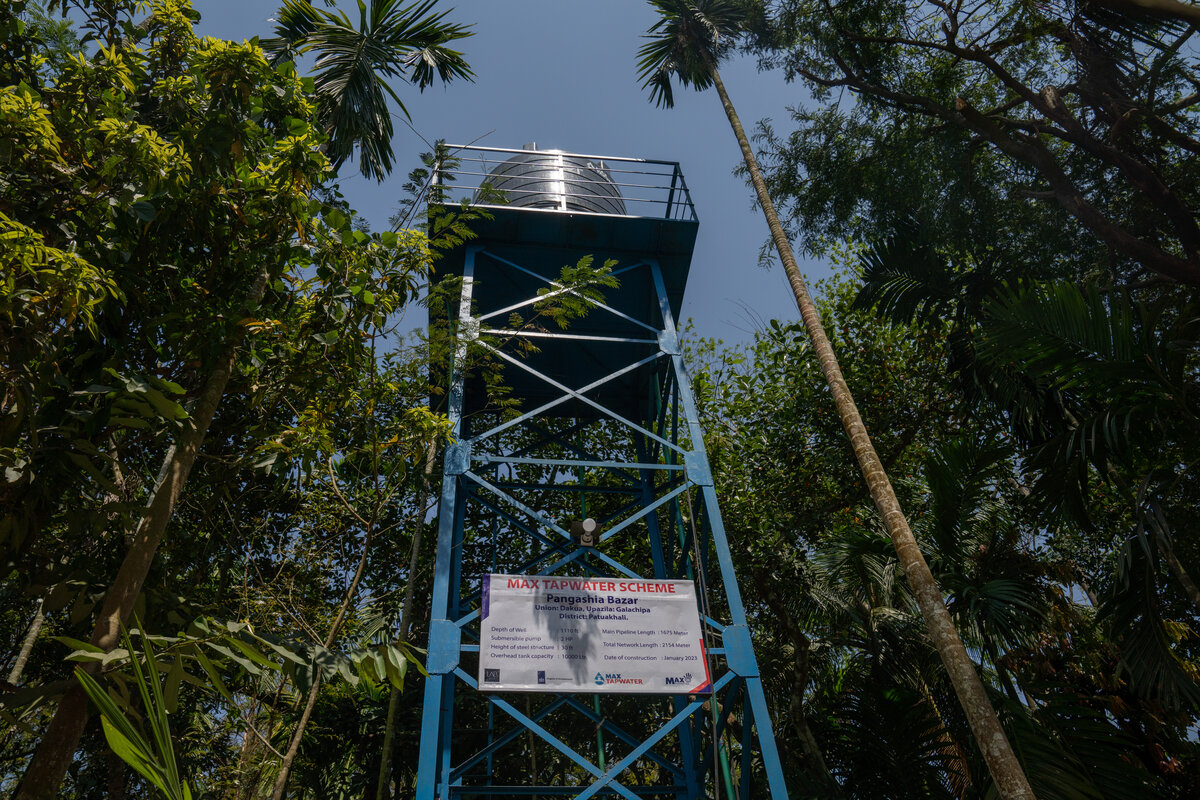
Scaling Safely Managed Water through Pipe Water Schemes
Across 7 projects, Max Foundation has constructed 153 piped water grids connecting 8,539 households — reaching 35,864 people with reliable, safely managed water. The Building Water Business project alone has commissioned 100 operational grids, proving community-managed water infrastructure can be financially sustainable.
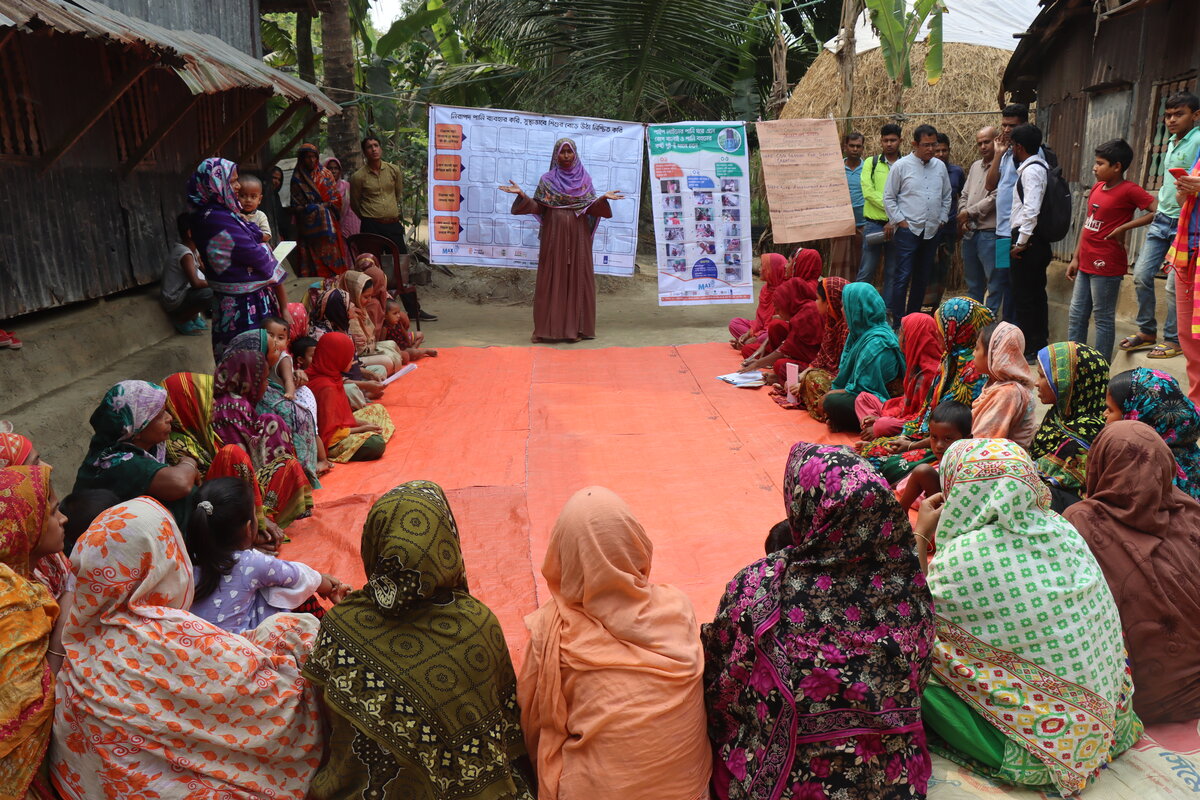
Reaching 2.1 million: From coverage to community transformation
Across 5 divisions, 16 districts, 32 upazilas, and 116 unions, Max Foundation's 9 major project/programmes have reached 2.1 million people with WASH and child health interventions — transforming 1,102 villages into declared Healthy Villages and moving 27,842 children out of stunting.